Back To Blog


Key Takeaways
- Truck rollovers occur when excessive lateral force causes a commercial vehicle to tip onto its side or roof.
- Speed, cargo shifts, driver error, fatigue, weather and road conditions are among the leading causes of truck rollovers.
- Drivers can reduce rollover risk by slowing down on curves, securing cargo, maintaining their trucks and staying alert.
Truck rollover accidents are among the most dangerous types of commercial truck crashes and can affect tractor-trailers, tanker trucks and other heavy-duty vehicles. According to large truck and bus crash data collected by the Federal Motor Carrier Safety Administration (FMCSA), an overturn/rollover was the first harmful event in 4% of all fatal large truck crashes and 2% of all nonfatal crashes in 2022. With approximately 5,279 fatal large truck crashes recorded that year, that means there were hundreds of crashes where a rollover is what set everything else in motion.
Rollover fatalities account for a disproportionate share of motor vehicle accidents involving semis, largely because the forces at play are so extreme. Catastrophic injuries, including internal injuries and roof crush events, can occur even if the driver is properly wearing their seat belt.
But here's the good news: Most rollovers are preventable.
FMCSA data shows that over 78% of rollovers involve driver error. That means the biggest variable in the equation is the person behind the wheel, which means understanding what causes rollovers is key to preventing them.
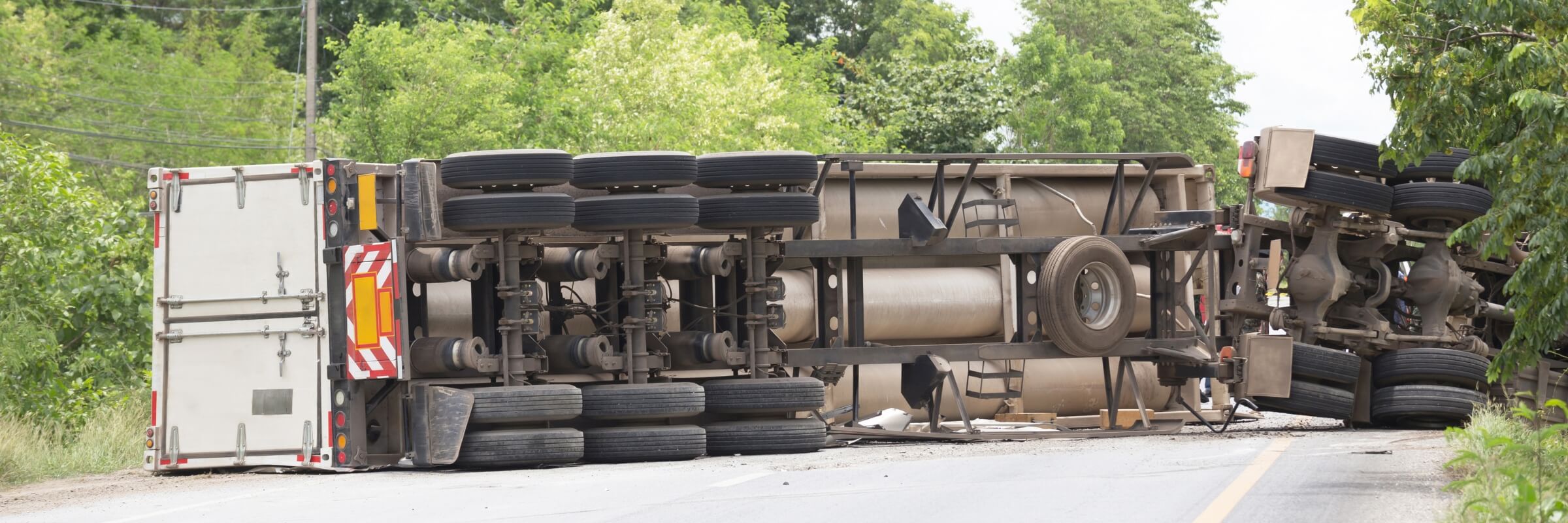
What Is a Truck Rollover? A truck rollover occurs when a commercial vehicle tips onto its side or roof due to excessive lateral force,often caused by speeding, cargo shifts, driver error or adverse road conditions.
Why Are Large Trucks Prone to Rollovers?
A tractor trailer and a passenger car handle completely differently on a curve. The reason large trucks are so much more rollover-prone comes down to physics: They have a higher center of gravity.
A loaded tractor trailer can weigh up to 80,000 pounds, with a lot of that weight sitting several feet above the road's surface. When a truck takes a curve, centrifugal force pushes the load outward. The higher the vehicle's center of gravity, the less lateral force it takes to roll.
Vehicles with a higher center of gravity, including SUVs, vans and large commercial trucks, carry a significantly greater rollover risk than lower-profile passenger vehicles. Large trucks sit at the extreme end of that scale.
What Causes Truck Rollover Accidents?
There's rarely just one thing that causes a truck to tip over. Most rollover crashes occur because several risk factors compound on top of each other. Here's a look at the common causes.
Truck Rollover Causes at a Glance
| Cause | Why It Increases Rollover Risk |
| Excessive Speed | Increases centrifugal force when navigating curves and exit ramps |
| Cargo Shift | Changes the truck's balance and center of gravity unexpectedly |
| Driver Error and Fatigue | Reduces judgment, reaction time and vehicle control |
| High Winds | Creates lateral force that can push a trailer off balance |
| Road Conditions | Reduces traction and stability when combined with speed or uneven loads |
Excessive Speed on Curves and Exit Ramps
Excessive speed around road curves is one of the most common causes of single-vehicle rollovers. Exit ramps, connector ramps between freeways and winding two-lane roads are all high-risk areas. Rollovers occur most often at these locations because the combination of curve radius, elevation change and speed is hardest to judge from inside the cab.
A lot of drivers get caught because the road looks open, or the truck feels stable at high speeds. What catches them off guard is how quickly centrifugal force builds in a curve when they're pulling a high, heavy trailer.
Speed advisory signs posted on ramps are also calibrated for passenger cars, not for a loaded commercial truck. In practice, it's recommended that large trucks reduce their speed to about one-third to one-half of what those signs suggest before entering a curve.
Improper Load Distribution and Cargo Shift
A load that's stacked too high raises the vehicle's center of gravity. Uneven weight distribution from side to side, or too much cargo concentrated toward the rear, makes the truck harder to control through any sudden movement.
Loose cargo is worse. A load that shifts can instantly change the truck's balance, giving the driver almost no time to respond.
That's why FMCSA regulations require checking load securement within the first 50 miles of a trip and every three hours or 150 miles afterward.
Liquid cargo adds another risk factor. The sloshing effect in a partially filled cargo tank amplifies lateral force through curves, which means tanker rollovers can occur at speeds that would be perfectly safe for a dry van.
Driver Error and Distracted Driving
Driver error accounts for the majority of large truck rollover crashes. Over-steering to the point of rolling over, misjudging load height and weight when approaching a curve and overcorrecting after a swerve are among the most cited causes.
Distracted driving and driver fatigue reduce a driver's ability to catch the early warning signs before a rollover. Fatigue behaves a lot like alcohol impairment when it comes to reaction time and judgment. A tired driver is more likely to misjudge curve entry speed, lose control during a sudden crosswind or miss the early signs that the truck is starting to lean.
High Winds
High-profile trailers act like sails in crosswinds. Bridges, overpasses, open plains and mountain passes are the highest-risk areas for wind-related tip-overs because there's no terrain to break the gusts. A strong gust hitting the broadside of a loaded 53-foot trailer can generate significant lateral force, fast.
Road Conditions
Road conditions are a contributing factor, too. Poor road design, unexpected potholes, reduced traction from standing water and uneven pavement all affect how tires grip the surface.
Any of these can push rollover risk higher when combined with speed or a poorly distributed cargo load.
How to Prevent Truck Rollovers: 4 Vital Tips
Rollover prevention revolves around building consistent habits. The following practices can help drivers reduce rollover risk on every run.
1. Slow Down Before Curves and Exit Ramps
Braking inside a curve shifts weight and reduces stability. Instead, reduce speed on the straight section of road before you enter the curve, then hold a steady pace through it.
Avoid sudden movements with the steering wheel. Smooth, deliberate inputs keep the trailer tracking correctly behind the cab.
Exit ramps also require some extra attention. They're the highest-risk areas for large truck rollovers because they can combine a curve, a change in grade and a speed reduction all in one short stretch. To be safe, never continue your highway speed when entering a ramp.
2. Conduct Pre-trip Inspections and Secure Your Cargo Before Every Trip
Your pre-trip inspection should include a close look at the load. Put heavy items on the bottom. Distribute weight evenly from side to side and front to back. Confirm that all straps, chains and load locks are tight before you pull out.
After your first stop, check again. Vibration and road impacts can loosen securement, and a cargo shift mid-trip can be what contributes to a rollover with no other warning signs.
If you're hauling liquid cargo, factor in your fill level. A partially filled tank is more susceptible to sloshing than a full one, and that dynamic load makes curves more dangerous, requiring you reduce speed more than normal.
3. Keep Your Truck Maintained and Road-Ready
Tires, brakes and suspension components all affect how a truck handles when things start to go sideways. A brake deficiency can prevent you from slowing down in time before a curve. And a tire failure at highway speed can trigger a sudden load shift that gives you almost no recovery time.
The FMCSA's research on rollover incidents found that 54% of vehicles involved in rollovers had a brake defect. That's not a coincidence.
4. Manage Fatigue and Stay Alert Behind the Wheel
Watch for the early warning signs of an impending rollover. If your trailer sways after a lane change and doesn't settle, reduce speed gently and hold the wheel steady.
Avoid sudden movements in response to any unexpected shift in balance. If you feel drowsy, pull over before fatigue affects your reaction time.
Manage your hours seriously. A fatigued driver and a loaded trailer on an exit ramp create exactly the kind of scenario that leads to an incident report. The road will still be there when you're rested.
Keep Your Truck Road-Ready at Rush Truck Centers
Truck rollovers are serious, but the causes are well-documented and most of them are within your control. Manage your speed on curves and exit ramps. Secure your cargo before the wheels start turning. Stay current on your truck's maintenance. Handle fatigue before it handles you. These habits, repeated on every run, are what keep drivers safe for the long haul.
At Rush Truck Centers, our technicians see firsthand how a maintenance issue that seems minor in the shop can set the stage for a much bigger problem on the road. If you need support keeping your truck safe, road-ready, and performing at its best, we're here to help. We offer a one-stop shop for new and used truck sales, all-makes parts, complete truck repairs and 24/7 support through our RushCare Customer Support Team.
Contact your nearest Rush Truck Centers location today to get started.
COME ALONG FOR THE RIDE. Sign up to receive email updates with our latest promotions, blog posts and news from Rush Truck Centers.