Back To Blog


Key Takeaways
- Start with your operation. Match your terminal tractor to trailer volume, shift length, loaded weights, yard conditions and any public-road travel requirements.
- Choose specifications that fit the job. Compare 4x2 and 6x4 configurations based on axle capacity, traction and maneuvering needs, then evaluate powertrains against your duty cycle and fueling or charging infrastructure.
- Look beyond purchase price. Consider operator safety and comfort, maintenance needs, local service support and total cost of ownership when comparing new and used terminal tractors.
Choosing the right terminal tractor starts with understanding your operation: how many trailers you move, how long each shift runs, what loads you handle and whether the truck needs to travel on public roads. These factors help determine the axle configuration, powertrain and features your yard needs.
Terminal tractors — also called yard trucks, yard spotters, yard dogs or hostlers — keep trailers moving at warehouses, distribution centers, ports and intermodal facilities. This guide covers six factors to consider when selecting one for your operation.
What Is a Terminal Tractor?
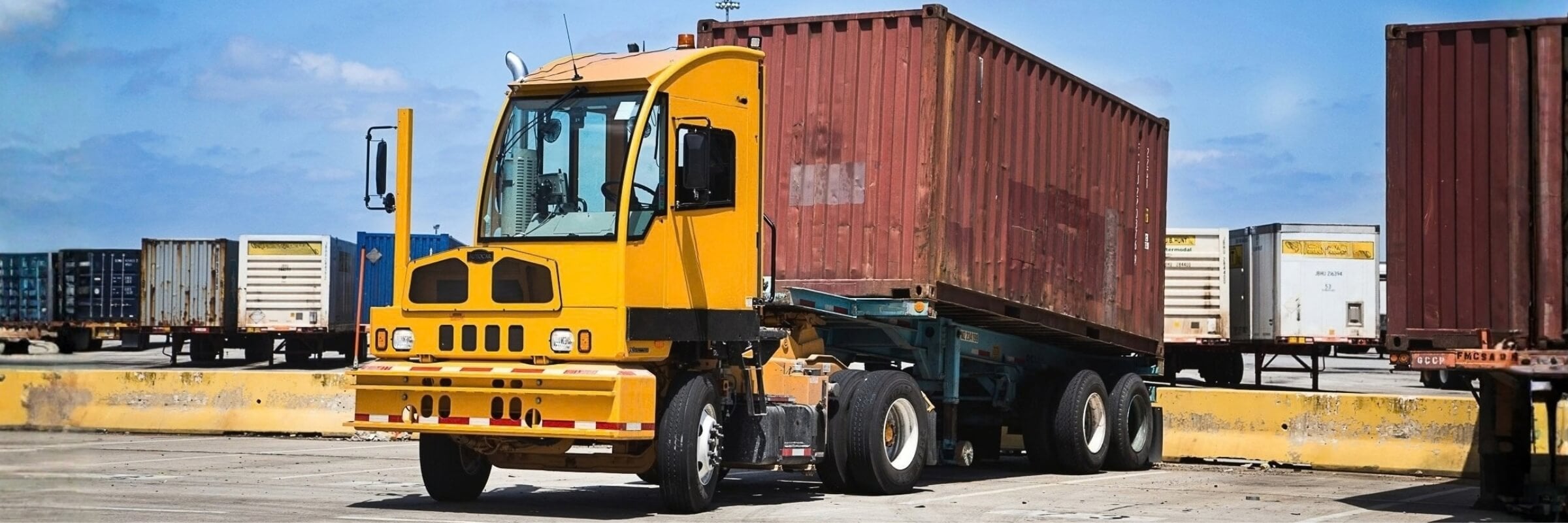
A terminal tractor is a purpose-built truck designed to move semi-trailers over short distances within a yard, warehouse, distribution center, port or intermodal facility. It can also move shipping containers carried on chassis.
Unlike highway tractors, terminal tractors are designed for frequent coupling, uncoupling and trailer repositioning. Busy freight hubs with high trailer volume often run a small fleet of terminal tractors.
How to Choose the Right Terminal Tractor or Yard Truck
The six factors below cover key considerations when selecting a terminal tractor, from how your yard operates to the powertrain under the hood.
1. Start With Your Application and Duty Cycle
Before you look at a single spec sheet, figure out how the truck will actually be used day to day.
A single-shift operation moving a couple dozen trailers a day has very different needs from those of a port terminal running three shifts back to back. If your yard never really quiets down, you want a tractor (and a maintenance plan) built for that kind of uptime.
Consider trailer volume and yard size. A cramped yard with tight corners and closely parked trailers calls for a maneuverable model with a small turning radius and strong visibility to keep yard flow smooth. A sprawling intermodal depot moving hundreds of trailers a day might need several tractors running at once.
Also look at your operating environment. Uneven pavement, gravel, potholes and steep approaches can affect traction, ride quality and equipment wear. Ask the manufacturer or dealer to recommend tires, suspension and chassis specifications suited to your terrain and loaded operating conditions.
Climate plays a role too. Cold weather can affect battery runtime and charging performance, so account for seasonal conditions when evaluating electric models. Ports and coastal facilities expose equipment to salt air that speeds up corrosion, so ask about weather-sealed components and rust-resistant cab and frame construction if that's where the truck will live.
2. Decide Between On-Road and Off-Road
If your operation requires travel on public roads, including moves between facilities across a public street, select a DOT-compliant terminal tractor designed for public-road use. Before purchasing, confirm the applicable registration, inspection, insurance and driver requirements for your location and operation.
If the tractor operates exclusively within a private yard, an off-road model may make the most sense. Select the configuration for your loads, terrain and duty cycle, and plan for routine inspections and preventive maintenance.
3. Match the Axle Configuration and Powertrain to the Job
Once you know how and where the truck will run, it's time to get into the mechanical side of things: how many axles it rides on and what will power it.
Choosing Between 4x2 and 6x4
A 4x2 terminal tractor has one rear drive axle, while a 6x4 has two. The right choice depends on how your loads, yard conditions and maneuvering needs match the truck’s specifications.
- A 4x2 may make sense for routine trailer moves on relatively level, paved surfaces when loaded weights fall within the truck’s ratings. A shorter-wheelbase configuration can be useful around tight dock approaches and closely parked trailers.
- A 6x4 may make sense when your operation needs greater rear-axle load capacity or additional traction for loaded moves on grades or challenging surfaces. Compare its wheelbase and turning radius with the space available in your yard.
Before choosing your axle configuration, confirm gross combination weight rating (GCWR), axle ratings, fifth-wheel capacity and the manufacturer’s suitability recommendations for your application. A 6x4 does not automatically have a higher GCWR, and axle configuration alone does not determine whether a truck can travel on public roads.
Choosing a Powertrain
Next, compare powertrains against your duty cycle and available infrastructure.
- Diesel: Consider diesel if your operation needs familiar fueling procedures and established maintenance support. Compare fuel consumption, emissions-system maintenance requirements and local service availability against your duty cycle.
- Electric: Battery electric terminal tractors may be a good fit when charging access and available charging time align with the duty cycle. The North American Council for Freight Efficiency’s terminal tractor research reported approximately 60–75% lower maintenance costs compared with diesel terminal tractors from 2017 onward equipped with diesel particulate filters and selective catalytic reduction systems.
- Natural Gas: Available on certain terminal tractor models, natural gas may be worth considering for operations with access to suitable fueling infrastructure. Compare fuel availability, storage requirements, maintenance support and total operating costs with diesel and electric options.
4. Consider Key Features That Affect Everyday Use
Two terminal tractors with similar specifications can feel very different during a full shift. Compare the features that help operators move trailers efficiently and comfortably.
Fifth Wheel and Coupling System
Look for a hydraulically elevating fifth wheel with the lift capacity and height range your trailers require. Confirm that it provides adequate landing gear clearance across the surfaces in your yard. Ask which coupling and locking features come standard and whether lock indicators, sensors or interlocks are available.
Cab Durability, Comfort and Visibility
Evaluate cab construction, corrosion protection and visibility from the operator’s seat, including sightlines to the fifth wheel and surrounding work areas. Easy entry and exit, an adjustable seat, effective heating and air conditioning and accessible controls can make a difference during shifts with frequent stops and trailer changes.
Turning Radius and Maneuverability
Compare turning radius and wheelbase against your yard’s tightest corners, dock approaches and trailer spacing. Make sure the tractor can maneuver with the trailers your operation uses, including when they are fully loaded.
Telematics and Fleet Tracking
Ask whether telematics can track operating hours, fault codes, idle time and maintenance needs. For electric models, battery charge and energy-use data can also help you plan charging around daily operations. Confirm which features are included and whether subscriptions cost extra.
5. Prioritize Operator Safety
Evaluate safety features alongside your yard’s traffic patterns, lighting and operating procedures. Check mirrors, work lights, slip-resistant steps and grab handles, and ask about available cameras and backup sensors. These visibility aids can help operators monitor their surroundings, but safe operation also depends on training, appropriate speeds and attention to trailer movement and load stability.
Operators should follow the manufacturer’s procedures for coupling, verifying the fifth-wheel lock and positioning the trailer for travel. Before purchasing, confirm which safety features are standard, which are optional and what operator training is available.
6. Weigh New vs. Used and Set a Realistic Budget
Once you've nailed down the specs, compare purchase price and total cost of ownership. New terminal tractor pricing varies by powertrain, axle configuration and selected options. Include fuel or electricity, fueling or charging infrastructure, preventive maintenance, repairs and expected downtime in your budget.
A used terminal tractor may be a practical option if its specifications, condition and remaining service life fit your operation. Review operating hours and maintenance records, and have a qualified technician inspect the fifth wheel, hydraulic system, brakes, steering and drivetrain. Also consider parts availability and local service support.
Find Your Autocar Terminal Tractor at Rush Truck Centers
Rush Truck Centers sells Autocar terminal tractors at select dealerships across the country, with diesel, natural gas and battery-electric options available. Explore the Autocar ACTT and E-ACTT lineup and connect with our truck sales team to discuss the right configuration for your loads, duty cycle and road-use needs.
Explore Autocar terminal tractors and inquire about availability for your operation.
COME ALONG FOR THE RIDE. Sign up to receive email updates with our latest promotions, blog posts and news from Rush Truck Centers.