Back To Blog


Key Takeaways
- Coolant loss isn't normal: If your truck's coolant level keeps dropping, a leak or other cooling-system issue is likely to blame, even if you don't see a puddle.
- Watch for warning signs: Rising engine temperatures, low-coolant warnings, visible fluid, a sweet smell and frequent need for top-offs can all signal a cooling-system problem.
- Don't ignore ongoing coolant loss: Pull over safely if the engine temperature keeps rising, and have persistent coolant loss diagnosed before it leads to overheating or costly engine damage.
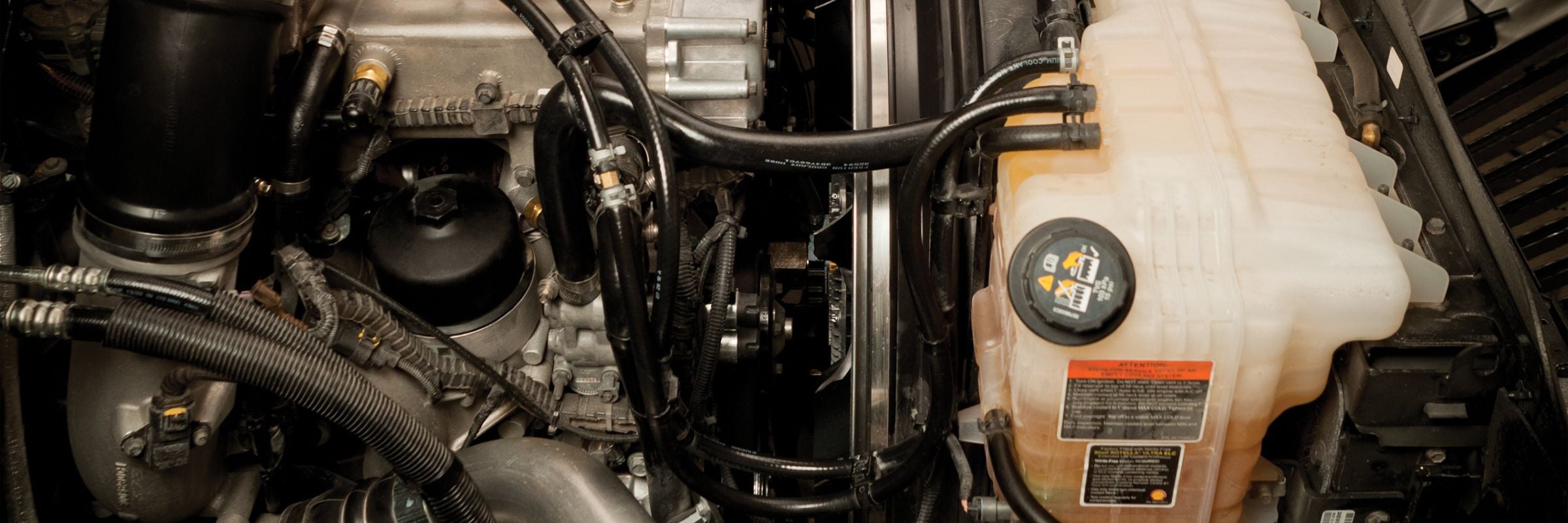
You check the reservoir on Monday, and it's full. However, by Friday, it's down two inches, and you have no idea why. If that sounds familiar, you're dealing with a classic case of a truck losing coolant.
If your truck keeps losing coolant, there’s most likely a leak or other cooling-system issue that needs attention — even if you don’t see an obvious puddle. Common causes include damaged hoses, loose clamps, radiator or water-pump leaks, a faulty pressure cap, and internal engine problems such as a failed EGR cooler or head gasket.
Some cooling-system leaks are relatively simple to repair, but ignoring coolant loss can lead to overheating and expensive engine damage. Below, we’ll cover the signs to watch for, the most common causes, what you can safely check yourself and when it’s time to have the truck inspected by a professional.
Is It Safe to Drive a Truck That's Losing Coolant?
First things first — whether or not it's safe to drive a truck that’s losing coolant depends on how bad the loss is, but lean toward caution. Federal regulations require drivers to “be satisfied that their motor vehicle is in safe operating condition” before hitting the road, and an active coolant leak counts as a defect that should be addressed.
If your temperature gauge is increasing or a warning light is on, pull over somewhere safe and let the engine cool before deciding your next move. Pushing a truck through a known coolant leak can turn a cheap hose repair into expensive engine work.
Signs Your Truck Is Losing Coolant
Cooling-system problems often produce warning signs before they lead to overheating. Here's what to keep an eye (and nose) on.
Low-Coolant Warning Lights
Most trucks use a float sensor in the reservoir to trigger a low-coolant light on the dash, which means it will likely catch the drop before you notice it manually.
If the low-coolant light comes on, don't just top off the reservoir and move on. Note how much you had to add, and check the reservoir and hoses for any obvious problems. If you find you're adding coolant more than once on the same trip (or just more than usual), treat that as your signal to get the system looked at rather than continuing the same cycle.
Rising Engine Temperatures
Know your truck's normal operating temperature (typically between 180°F and 220°F for diesel engines), and watch for temperatures that climb unusually high or trigger a warning. Coolant loss is one of the first things to rule out in this scenario. If the temperature continues rising or an engine-temperature warning appears, pull over safely and follow the manufacturer's guidance.
Visible Leaks or Puddles
Finding colored fluid with a slick feel or sweet odor on the ground under the truck after it's been parked overnight is about as clear a sign as you’ll get that there’s a coolant problem.
A puddle at the very front of the truck, directly below the grille, usually means fluid is dripping straight down from the radiator or one of the hoses connected to it above that spot. Also check underneath the cab and sleeper. Coolant lines feed the heater core and often pass through firewall fittings tucked behind the cab, so a stain back there can signal a leak at one of those connections.
A Sweet Smell From Under the Hood
Hot coolant is well known for its distinct, syrupy-sweet smell as it escapes. If the sweet smell shows up inside the cab rather than under the hood, it may be coming from the heater core.
A More Frequent Need to Top Off the Coolant
A properly sealed cooling system shouldn't need regular refills. If you find yourself topping off the coolant reservoir every week, or even every few days, that's not normal. Something is letting fluid escape.
6 Common Causes of Coolant Loss
Coolant loss can often be traced back to a few common areas in the cooling system. Here are six places to check:
1. Leaking Hose or Loose Clamp
This is the most common culprit. Rubber hoses dry out, crack and get brittle with age and heat cycling. And clamps can loosen or corrode over thousands of miles of vibration.
Squeeze the hoses when the engine is cold. If they feel rock hard, spongy or swollen, it may be time to replace them.
2. Radiator Leak, Damage or Faulty Pressure Cap
Road debris, corrosion and age can open up pinholes in the radiator core or its seams. These leaks can be sneaky, since the heat coming off the radiator sometimes evaporates the small amounts of coolant that leak through, so you may not always notice the issue right away.
A worn or damaged cooling-system pressure cap can also cause coolant loss. If the cap can't maintain the proper system pressure or its seal is damaged, coolant or vapor may escape while the engine is hot. Because coolant can evaporate before reaching the ground, a faulty cap may cause coolant levels to drop without leaving a visible leak.
3. Water Pump Failure
The water pump keeps coolant moving through the engine, and its internal seal is one of the first things to wear out. A faulty water pump often starts as a slow drip beneath the pulley, sometimes paired with a grinding or whining noise as the bearing goes.
4. Thermostat Housing Leak
The housing and gasket that seal your thermostat can crack or degrade over time. This lets coolant seep out where the thermostat meets the engine block. It's an easy spot to overlook during a quick visual check because it's tucked in close to other components.
5. Reservoir Damage
The coolant reservoir is plastic, which means it's prone to hairline cracks, especially near the seams or where the cap threads on. A cracked reservoir won't completely deplete your coolant overnight, but it will force you to top off more often than you should have to.
6. Blown Head Gasket or Internal Engine Issues
Head gasket failure, a cracked cylinder head or a failed EGR cooler can let coolant enter areas it shouldn't, like the combustion chamber or the engine oil.
Watch for persistent white exhaust after the engine is warm, milky-looking engine oil when you check the oil dipstick or bubbles in the reservoir even when the engine isn't overheating. Any of these can point to an internal leak.
Why Is My Truck Losing Coolant But Not Leaking?
Coolant can burn off internally through a small head gasket leak, evaporate off a hot radiator or seep out through a hairline crack in the reservoir that only shows up as a faint stain.
If your levels keep dropping and you can't find a puddle anywhere, don't assume everything is fine. As mentioned above, a worn pressure cap can allow coolant to escape as vapor, while small leaks elsewhere in the system may evaporate before reaching the ground. Internal leaks can also cause coolant loss without leaving visible evidence.
With the engine off and completely cool, inspect the pressure cap and work your way through the rest of the cooling system for signs of coolant loss.
What to Do If Your Truck Is Losing Coolant
If you catch a leak on the road, get somewhere safe and let the engine cool completely before touching anything. Never crack open a hot, pressurized cooling-system cap, since it can release scalding steam or fluid.
Once things have cooled, check your hoses and the areas around the radiator and water pump for obvious signs of trouble.
In an emergency (meaning you're low on coolant and can't reach a shop right away), and only if the engine manufacturer permits it, it may be better to add clean water once the engine has cooled completely than to continue operating with dangerously low coolant. This is only a temporary fix, and you should plan to restore the system to the manufacturer-specified coolant mixture as soon as possible.
Note: You should never resort to mixing coolant formulations unless the manufacturer confirms they're compatible. If you're unsure what's already in your system, check the OEM specification before topping off.
Once you're back at your home base, get the actual source of the leak diagnosed and repaired instead of just refilling and hoping it holds.
How to Prevent Coolant Leaks
A little routine attention goes a long way. Check coolant levels when the engine is cold, ideally as part of your daily pre-trip walk-around, and keep an eye on hose condition every time you're under the hood.
Flush and replace coolant on the schedule your manufacturer recommends. Old coolant loses its corrosion protection and can accelerate wear on the radiator and water pump.
Building these checks into a broader preventive maintenance schedule will ensure that you catch most issues while they're still cheap fixes instead of roadside emergencies.
It's also smart to keep a couple of gallons of coolant, or at least water as a stopgap, in your truck. If you already carry a truck emergency kit, coolant belongs right next to the jumper cables and flashlight.
When to Have Your Cooling System Inspected
Some fixes are simple enough to handle yourself, like swapping a worn hose or tightening a loose clamp. But if you're seeing persistent white exhaust, milky oil, bubbles in the reservoir or a temperature gauge that won't settle down, bring in a certified technician rather than guessing. A trained tech can run the system through a pressure tester to find leaks that don't show up during a visual inspection.
At Rush Truck Centers, our technicians see cooling-system issues on every make and model that rolls through the bay, from a worn hose to a full water pump replacement. With more than 140 dealerships across 24 states, we offer diagnostics, repair and genuine replacement parts to get your truck's cooling system back to full strength and keep small problems from turning into major engine work.
If your truck is losing coolant, don't wait until it overheats to address the problem. Schedule a cooling system inspection at your nearest Rush Truck Center, or shop replacement cooling system parts through our online parts ordering site.
COME ALONG FOR THE RIDE. Sign up to receive email updates with our latest promotions, blog posts and news from Rush Truck Centers.