Back To Blog


Updated: August 14, 2026
Key Takeaways
- Natural gas vehicles offer a cleaner, cost-effective alternative to diesel and gasoline, delivering comparable performance while significantly reducing greenhouse gas emissions — especially when fueled with renewable natural gas, which can be carbon negative.
- Truck owners have multiple pathways to adopt NGVs, including purchasing dedicated natural gas trucks, converting existing engines, and choosing between compressed natural gas (CNG) or liquefied natural gas (LNG), depending on range and application needs.
- Cummins leads the market in dedicated natural gas engines, offering a range of CARB- and EPA-compliant models with near-zero or sub-zero emissions, alongside integrated CNG fuel system solutions through Cummins Clean Fuel Technologies.
According to the US. Department of Energy, natural gas currently powers more than 175,000 vehicles in the United States and 23 million vehicles worldwide. Natural gas vehicles (NGVs) aren’t a new addition to the transportation industry but are increasingly growing in popularity as truck owners and fleets look for alternative fuel options that can help them reduce their greenhouse gas emissions and meet sustainability goals.
The natural gas engines currently available in the market for commercial vehicles can provide a 1:1 replacement for diesel and gasoline engines in terms of power, torque, and range, and offer the benefit of cheaper, less volatile fuel costs and reduced maintenance needs. But one of the greatest benefits of making the switch from diesel and gasoline to natural gas fuel is the environmental impact. In fact, replacing one aging diesel-powered truck with a truck powered by a natural gas engine is the clean-air equivalent of removing 119 cars from the roads, according to The Transport Project.
While the benefits natural gas engines can provide speak for themselves, truck owners have several options when it comes to introducing NGVs within their fleets. From picking the best type of NGV for their fleet to selecting the correct engine and natural gas fuel to meet emissions goals and application demands, we broke down the options companies have when it comes to making the switch to natural gas.
Types of Natural Gas Vehicles
When looking to make the transition to natural gas, truck owners can either purchase a dedicated NGV or convert an existing diesel or gasoline engine to also run on natural gas. The three types and configurations of natural gas vehicles are:
- Dedicated: Vehicles designed to run only on natural gas, typically using spark-ignited internal combustion engines.
- Bi-Fuel: Vehicles equipped with two separate fueling systems that enable the engine to operate on either gasoline or natural gas. Both fuels are stored onboard, allowing the vehicle to operate on either fuel.
- Dual-Fuel: Vehicles that primarily use natural gas but also use diesel fuel for ignition. These configurations require onboard storage for both fuels and may require diesel aftertreatment components, making them more complex than dedicated natural gas vehicles. For this reason, dual-fuel NGVs are traditionally limited to heavy-duty applications.
Retrofitting Engines to Run on Natural Gas
Dedicated medium- and heavy-duty natural gas truck models are commercially available from leading truck manufacturers, but truck owners also have the option of converting existing gasoline or diesel engines to use natural gas instead.
Qualified vehicle modifiers or system retrofitters, such as Custom Vehicle Solutions, can convert many engines to use natural gas by installing fuel-specific supply lines, storage components and controllers as well as recalibrating the engine. Trucks and vehicles are typically converted to dedicated NGVs or bi-fuel NGVs.
Types of Fuels Used in Natural Gas Engines
Natural gas engines can operate on conventional natural gas or renewable natural gas (RNG). While both fuels consist primarily of methane and can be used in compatible natural gas engines, they differ significantly in how they are produced.
- Conventional Natural Gas: Conventional natural gas, also called fossil or geologic natural gas, is naturally occurring and is extracted from fossil fuels located in rock formations underground. Once extracted, the gas is separated from crude oil, hydrocarbons, water and other solids before being further processed to be used as fuel. Conventional natural gas is a non-renewable resource.
- Renewable Natural Gas: RNG is produced by capturing and upgrading biogas generated from organic materials such as landfill waste, wastewater, food waste and animal manure. The resulting gas is processed to a quality that allows it to be used in place of conventional natural gas.
Capturing methane from certain waste sources can provide significant greenhouse gas benefits because methane is a potent greenhouse gas. The lifecycle carbon intensity of RNG varies based on the feedstock, production process and other factors. Some RNG pathways — particularly those that capture methane that otherwise would have been released into the atmosphere — can achieve very low or potentially negative lifecycle carbon intensity.
Whether produced by conventional or renewable methods, natural gas must be either compressed or liquefied before being used in vehicles.
- Compressed Natural Gas (CNG): CNG is produced by compressing natural gas down to less than 1% of its volume. CNG is stored onboard a vehicle in a compressed gaseous state.
- Liquified Natural Gas (LNG): LNG is produced by purifying natural gas and cooling it to -260°F, which changes it from a gas to a liquid at 1/600th its original volume.
CNG is currently used in light-, medium- and heavy-duty applications. A vehicle running on CNG gets approximately the same fuel economy as a conventional gasoline vehicle. LNG, on the other hand, must be stored at low temperatures in vacuum-insulated tanks, which makes its use in commercial applications limited. However, trucks running on LNG can typically drive further and longer than CNG vehicles because liquids are denser than gas, meaning more fuel can be stored onboard at one time.
Commercial Natural Gas Engine Options
Cummins has been producing natural gas engines for more than 30 years and is currently the only manufacturer of dedicated commercial natural gas engines in the industry. Natural gas engine options available in commercial trucks include the X15N, ISX12N, L9N and B6.7N, giving fleets choices for applications ranging from medium-duty and vocational operations to Class 8 and long-haul transportation.
Engine availability varies by truck manufacturer, model and configuration, so fleets should work with their dealer to identify the engine and vehicle combination best suited for their application.
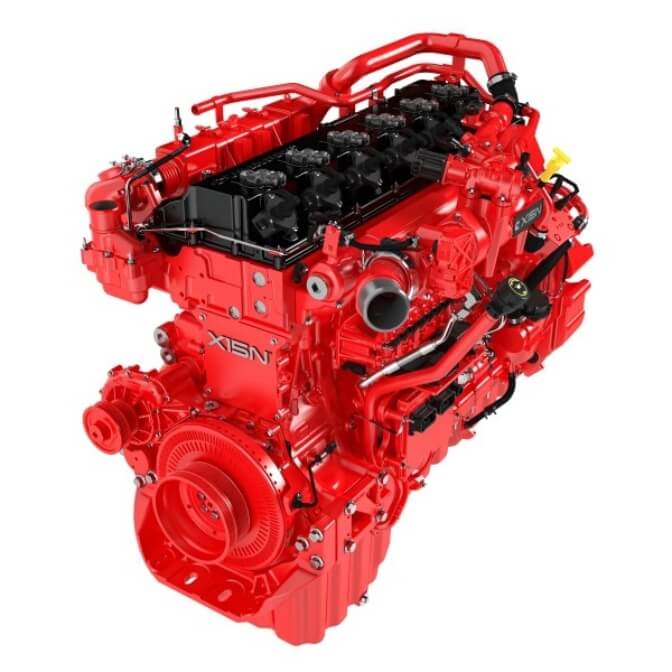 Cummins X15N Engine
The X15N is the industry's first natural gas engine with a 15-liter displacement and the range and power needed for heavy-duty and long-haul applications. The X15N's CO2 and NOx levels are both 90% below current EPA standards, and it provides up to a 10% improvement in fuel economy over the ISX12N.
- Horsepower: 400-500 hp
- Torque: 1,450-1,850 lb.-ft.
- Displacement: 15 liters
- Fuel type: CNG, LNG and RNG
Available in: Peterbilt Model 579, Peterbilt Model 567 and Peterbilt Model 520
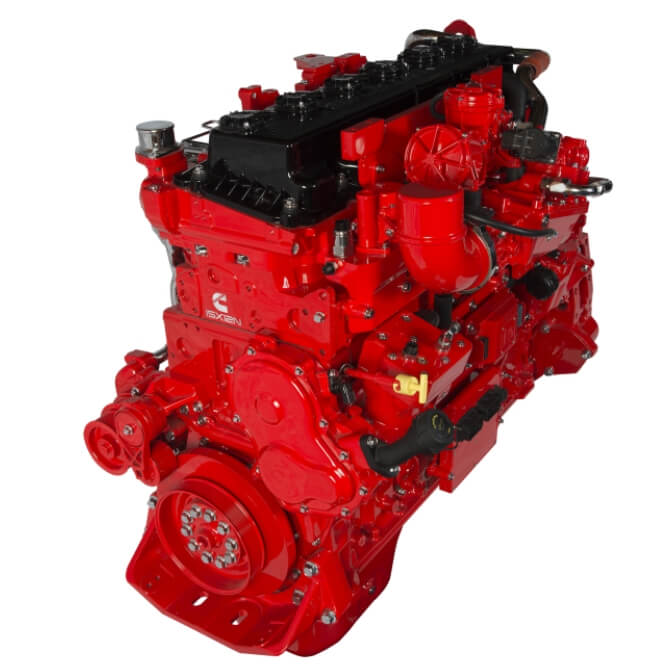
Cummins ISX12N Engine
The ISX12N is a 12-liter, 100% natural gas, spark-ignited engine. It is designed for heavy-duty applications including regional haul, refuse and vocational operations. Its combination of power, torque and established natural gas technology makes it an option for fleets that need Class 8 capability but do not require the higher horsepower and torque ratings of the X15N.
- Horsepower: 320-400 hp
- Torque: 1,150-1,450 lb.-ft.
- Displacement: 11.9 liters
- Fuel type: CNG, LNG and RNG
Available in: Peterbilt Model 579, Peterbilt Model 567 and Peterbilt Model 520
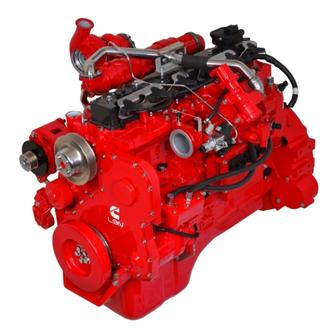
Cummins L9N Engine
The Cummins L9N is an option for fleets operating regional haul, refuse, municipal and other vocational applications. The 8.9-liter, spark-ignited natural gas engine provides up to 320 horsepower and 1,000 lb.-ft. of torque.
The L9N's combination of low NOx emissions, performance and established natural gas technology makes it well suited for applications with predictable routes and fueling requirements, including refuse, transit, municipal and regional operations.
- Horsepower: 250-320 hp
- Torque: 660-1,000 lb.-ft.
- Displacement: 8.9 liters
- Fuel type: CNG, LNG and RNG
Available in: Peterbilt Model 579, Peterbilt Model 567, Peterbilt Model 520, Peterbilt Model 548, Peterbilt Model 537 and Peterbilt Model 536
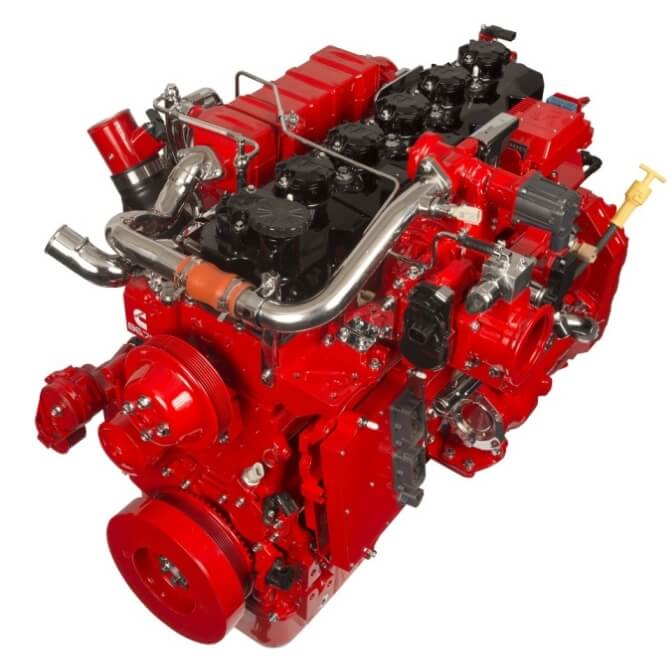 Cummins B6.7N Engine
The B6.7N is a 100% natural gas, spark-ignited engine option for medium-duty commercial vehicles and vocational applications. Its smaller displacement and compact design make it well suited for applications that don't require the power and torque of Cummins' larger natural gas engines.
- Horsepower: 200-240 hp
- Torque: 520-560 lb.-ft.
- Displacement: 6.7 liters
- Fuel type: CNG, LNG and RNG
Available in: Peterbilt Model 537, Peterbilt Model 536, Autocar ACTT 4x2 Off Road, Autocar 4x2 DOT and Autocar 6x4 DOT
Cummins Clean Fuel Technologies CNG Fuel Systems
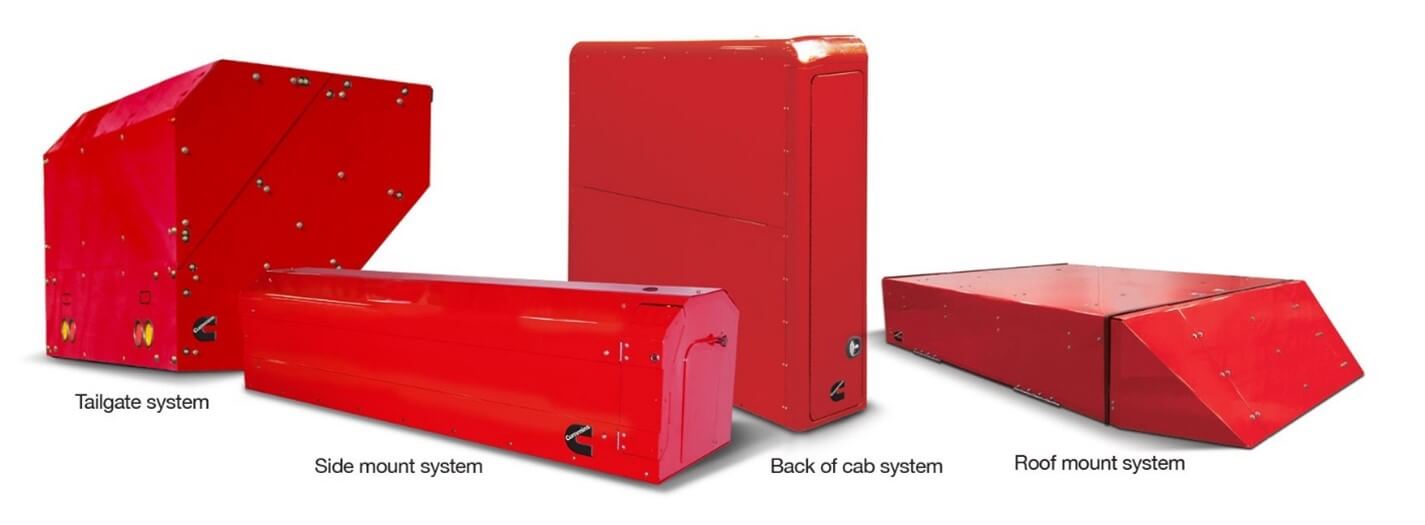
Cummins Clean Fuel Technologies (CCFT), a joint venture between Cummins and Rush Enterprises, produces CNG fuel systems that fully integrate with multiple truck body manufacturers to provide CNG storage for Class 6 through 8 natural gas vehicles. CCFT offers a variety of system integrations including back of cab, front of body, side mount, roof mount and tailgate mount. Each CCFT fuel system integrates directly with Cummins’ engine control units (ECMs) using exclusive GreenLync™ technology to notify drivers of fuel pressure readings, temperature-compensated fuel levels and distance-to-empty.
The CCFT back of cab CNG delivery system can be integrated with the new Cummins X15N natural gas engine to ensure a fully integrated natural gas powertrain.
Natural Gas Engine Support from Rush Truck Centers
Rush Truck Centers is the leader in alternative fuel system vehicles and offers natural gas-powered trucks from industry leaders. Our sales specialists are experts in natural gas technologies and can help find the right solution for your business. We also have natural gas-certified technicians and dedicated natural gas service bays at Rush Truck Centers locations across the country.
Learn more about our alternative fuel solutions today or contact us to request more information.
COME ALONG FOR THE RIDE. Sign up to receive email updates with our latest promotions, blog posts and news from Rush Truck Centers.